Category Guides
Japanese Pop Culture & Toys Wholesale: A Sourcing Guide for US Retailers
A sourcing guide for US hobby, comic, and gift buyers on stocking Japanese pop culture goods and toys wholesale — covering US demand, why authentic vs. bootleg product is the defining issue in this category, how licensed-goods distribution actually works, and how to plan for routes, cost, and customs.

On this page
- The demand is real — and increasingly American
- The defining issue: authentic product vs. bootlegs
- How the licensed distribution chain actually works
- Commerce norms specific to licensed goods
- Sourcing routes for this category
- The costs that apply on every import: duties and freight
- orosy — Japan Direct Wholesale
- FAQ
Key takeaways
- US demand for Japanese anime merchandise and toys is growing fast — but most of that growth is now driven from outside Japan, which makes the sourcing route the real bottleneck.
- The defining issue in this category is authenticity: counterfeit character goods are a multi-billion-dollar problem, and stocking genuine product protects both your customers and your shelf.
- Authentic Japanese character goods move through a licensed chain — manufacturer to wholesaler (ton'ya) to retailer — and where you enter that chain determines what you can legitimately buy.
- Licensed merchandise often comes with category-specific commerce norms: allocations, pre-order release cycles, and resale conditions can all apply.
- Import duties and freight are real on every Japanese toy import; the toy rate isn't a single flat number, so plan it from the product's HTS classification rather than a headline figure.
The demand is real — and increasingly American
If you buy for a hobby shop, a comic store, a collectibles distributor, or a gift retailer, you have almost certainly watched Japanese pop culture move from a niche aisle to a front-of-store category. The numbers behind that shift are striking. Japan's anime industry reached a record ¥3.84 trillion (about $25 billion) in 2024, up roughly 15% year over year — and for the first time, overseas revenue made up about 56% of the total, growing 26% in a single year while domestic sales rose under 3%. (Anime News Network, citing the Association of Japanese Animations, Variety) In other words, the growth engine for Japanese pop culture now lives outside Japan, and the US is a central part of it.
The merchandise market mirrors that. The US anime merchandising market was estimated at roughly $638 million in 2025 and is projected to grow at about an 18% compound annual rate to reach $1.47 billion by 2030, with figurines the single largest product segment. (Grand View Research) Streaming exposure — Netflix, Crunchyroll, and others — keeps widening the audience that walks into your store already knowing the characters, the franchises, and which figure line they want.
So for a professional buyer, the hard part is not whether to carry Japanese toys and character goods. It's how to source them — and in this category, "how" comes with a question that doesn't apply to most others: how do you make sure what you're stocking is real?
The defining issue: authentic product vs. bootlegs
Every sourcing category has trade-offs. Japanese pop culture has a problem that sits above all of them. Counterfeit character merchandise is enormous and well-documented: a content-piracy survey commissioned by Japan's Ministry of Economy, Trade and Industry estimated that sales of counterfeit anime and character products caused roughly ¥4.7 trillion (about $30 billion) in financial damages in a single year. (Animenomics, citing the METI-commissioned survey) The 2024 USTR Review of Notorious Markets — the US government's own list of channels facilitating large-scale counterfeiting — identified 38 online and 33 physical markets, several of which are repeatedly cited as conduits for unauthorized figures, apparel, and collectibles. (USTR press release)
Why this matters more for you than for the brand owners:
- Shelf credibility. Hobby and comic customers are experts. A bootleg figure — wrong paint application, off-model sculpt, a missing or fake license seal — is recognizable to your most valuable buyers, and it travels by word of mouth.
- Legal and platform exposure. Selling unauthorized licensed goods carries trademark and copyright risk, and major marketplaces routinely remove listings and accounts for it.
- Margin illusion. Bootlegs carry a lower wholesale line, but returns, seizures, and reputational cost erase the apparent saving.
The practical defense is simple to state and harder to execute: buy inside the authorized chain. That means understanding how genuine Japanese character goods are actually distributed — because the structure of that chain is what separates a legitimate wholesale source from a grey one.
How the licensed distribution chain actually works
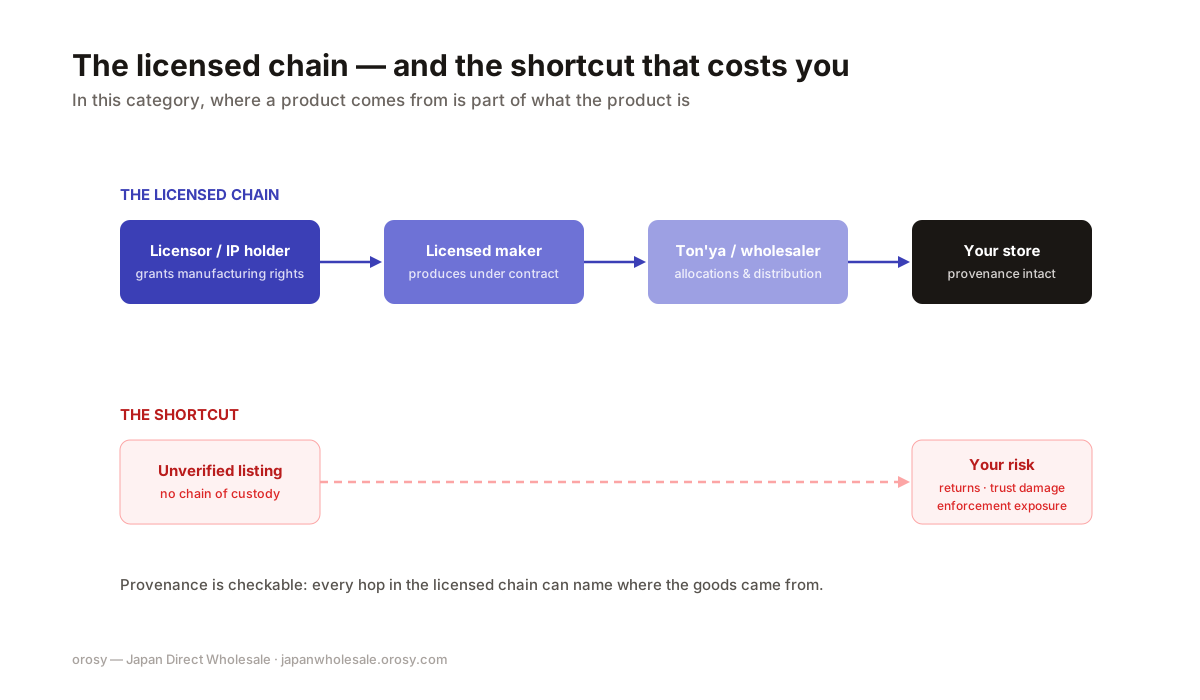
Authentic Japanese character merchandise generally moves through a layered, license-governed path before it ever reaches a US shelf:
- The rights holder / licensor owns the character or franchise.
- Licensed manufacturers are granted the right to produce specific goods (figures, plush, stationery, apparel) under that license.
- Wholesalers — the ton'ya — aggregate product from manufacturers and supply it to the retail trade. In Japan this wholesale layer is deep and long-established; much of the country's consumer-goods supply still flows through it.
- Retailers buy from that wholesale layer and sell to the public.
The key insight for a foreign buyer is that you don't typically buy from the rights holder, and you usually don't buy from the licensed factory either. You buy through the wholesale layer — the ton'ya — that the rights holder's licensed product flows into. A source is "authorized" not because it claims a direct line to a brand's headquarters, but because the goods it sells originated from a licensed manufacturer and moved through the legitimate wholesale chain rather than around it.
This is also why "official" and "direct-from-the-brand" claims deserve scrutiny. In practice, legitimate Japanese character goods reach overseas buyers through this wholesale chain, not through a single direct contract with each franchise owner. The right question to ask a supplier is not "are you the brand?" but "can you show that this product came through the licensed chain?"
Commerce norms specific to licensed goods
Beyond authenticity, licensed pop culture and toy product behaves differently from generic merchandise in ways that affect how you plan a buy. As a general matter — and varying by franchise, manufacturer, and product line — you may encounter:
- Allocations. Hyped figures and limited collectibles are sometimes distributed by quota rather than open order. Demand can exceed supply by design, and your access may depend on relationship and order history rather than simply placing a PO.
- Pre-order / reservation cycles. A large share of Japanese collectible figures are sold on a pre-order basis months ahead of production, with the final run sized to reservations. Missing the reservation window can mean missing the product entirely, and cancellation terms can be strict.
- Resale and territory conditions. Licensed goods can carry conditions on where and how they may be resold. Some product is licensed for the Japanese market specifically, and moving it across borders may sit outside the license — another reason the authorized chain matters.
- Release calendars. Product tied to a show, film, or game launch is timed to that event, which shapes when you can buy and when it will actually ship.
None of these are universal, and the specifics differ by franchise and supplier — but a buyer who plans around generic "order and receive" timing will be surprised by this category. Build allocation risk and pre-order lead times into your assortment plan from the start.
Sourcing routes for this category
The routes for sourcing Japanese pop culture goods are the same five that apply to Japanese wholesale generally — US-based importers, Japanese trade shows, direct manufacturer/wholesaler contracts, B2B marketplaces, and buying agents or trading companies — but this category sharpens the trade-offs. The narrower, pre-cleared routes (US importers, marketplaces) reduce your authenticity risk because someone has already vetted the chain, at the cost of a smaller selection. The broader routes (direct contracts, agents) open up more of Japan's catalog but put the burden of verifying the licensed chain on you, alongside language, minimums, customs, and freight.
For a full comparison of all five routes — including how each one trades selection against operational load, lead time, and who carries the customs work — see our companion guide.
→ How to source Japanese products wholesale in the US: the five routes compared
The category-specific overlay is this: whatever route you choose, your first screening question should be about the chain of custody of the license, not about price. A route that gives you a slightly better unit cost but can't demonstrate that product came through the authorized wholesale layer rarely saves money once you account for the authenticity risk described above.
The costs that apply on every import: duties and freight
Whichever route you pick, two costs are real and worth planning for honestly: import duties and international logistics. Both apply to toys and character goods just as they do to any other Japanese import.
On duties, resist the urge to memorize a single number. Under the 2025 US–Japan framework agreement, many Japanese consumer goods land at roughly 15%, and the structure matters: that 15% is inclusive of the pre-existing most-favored-nation (MFN) rate rather than stacked on top of it, and goods whose MFN rate was already above 15% keep their existing rate. The exact figure always comes down to the product's HTS classification, so the toy rate is not one flat number — it varies by category and product, and you should confirm it from the HTS for the specific item you're importing. (Congressional Research Service, Federal Register notice) US duties are also ad valorem — the percentage is the same whether you import a small test order or a container — and the duty exists in every route. When you buy from a US-based importer, it's already inside the price you pay. For the full cost picture — HTS lookup steps, clearance mechanics, and how to build a landed-cost model — see Importing Japanese products for retail: customs, duties, and logistics explained.
For a fuller treatment of landed-cost modeling, duties, and freight across Japanese imports, see our companion guide.
→ Import costs and customs when sourcing from Japan
The point is not that one route avoids these costs — none do. It's who carries the operational work of clearing them, and whether they stay visible and predictable in your landed-cost model.
orosy — Japan Direct Wholesale
orosy was built for buyers who want to stock Japanese product without assembling an import operation — and in a category like pop culture, without having to personally police the authenticity chain on every SKU. The name comes from the Japanese word orosu (卸す), "to wholesale." Suppliers on orosy are contracted directly by orosy, and the platform connects US buyers to a wide breadth of Japanese supply: 4,000+ Japanese brands and suppliers, over 1 million products, and 20,000+ buyers on the marketplace, with the company founded in 2018.
Because orosy buys at Japanese wholesale prices through direct, long-standing supplier relationships, your pricing is built on that purchasing power, with fewer intermediaries between you and the source than a typical import chain. orosy handles sourcing, customs, and international logistics on your behalf; the duties and freight that don't disappear pass through and are billed at cost, so your landed-cost model stays predictable. The aim is broad, vetted selection from Japan's shelf — chosen and handled through one workflow rather than stitched together from importers, agents, and freight forwarders.
If you'd rather choose from Japan's wider catalog of character goods and toys than from one importer's shortlist, you can join the waitlist here:
FAQ
How do I know if Japanese anime merchandise is authentic and not a bootleg?
Authentic Japanese character goods come from licensed manufacturers and move through the legitimate wholesale chain (manufacturer → wholesaler → retailer). The signal that matters is the chain of custody — being able to confirm the product came through that licensed chain rather than around it — not a vague "official" claim. Counterfeit product is a documented, multi-billion-dollar problem in this category, so verifying the source is a critical step. Buying through routes that have already vetted the chain (established importers or marketplaces that contract suppliers directly) reduces this risk.
Can I buy Japanese character goods directly from the brand that owns the franchise?
Usually not, and you generally don't need to. Genuine licensed merchandise reaches overseas buyers through Japan's wholesale layer (the ton'ya) that licensed manufacturers supply into — not through a direct contract with each franchise owner. Be cautious of any supplier claiming a direct line to a brand's headquarters; the right question is whether the product came through the licensed wholesale chain.
What is a pre-order or allocation in Japanese collectible toys?
Many Japanese collectible figures are sold on a pre-order (reservation) basis, often months before production, with the final run sized to reservations — miss the window and the product may be unavailable. Limited or hyped items can also be allocated by quota rather than open order, so access may depend on order history and relationship. Build these timing and availability conditions into your assortment plan rather than assuming standard order-and-receive timing.
What import duty applies to Japanese toys coming into the US?
There isn't one flat toy rate. Under the 2025 US–Japan framework, many Japanese consumer goods land at roughly 15%, inclusive of (not added to) the existing MFN rate, but the exact figure depends on the product's HTS classification and varies by category. Confirm the rate from the HTS for the specific item, and remember duties are ad valorem (the same percentage regardless of order size) and apply on every route — if you buy from a US importer, they're already inside the price.
Sources
- Global Anime Market Grew 15% to Record 3.84 Trillion Yen in 2024 (Association of Japanese Animations data), Anime News Network: https://www.animenewsnetwork.com/news/2025-10-30/global-anime-market-grew-15-percent-to-record-3.84-trillion-yen-in-2024/.230464
- Japan's Anime Market Hits Record $25 Billion, Driven by Global Boom (AJA report), Variety: https://variety.com/2025/film/markets-festivals/japans-anime-market-25-billion-global-boom-1236565413/
- US Anime Merchandising Market Size & Outlook, Grand View Research: https://www.grandviewresearch.com/horizon/outlook/anime-merchandising-market/united-states
- Counterfeit anime merchandise damages (METI-commissioned content-piracy survey), Animenomics: https://news.animenomics.com/p/counterfeit-anime-merchandise-cause-30-billion-dollars-in-damages
- USTR Releases 2024 Review of Notorious Markets for Counterfeiting and Piracy, USTR: https://ustr.gov/about/policy-offices/press-office/ustr-archives/2007-2024-press-releases/ustr-releases-2024-review-notorious-markets-counterfeiting-and-piracy
- US Tariffs and the 2025 US–Japan Framework Agreement, Congressional Research Service: https://www.congress.gov/crs-product/IN12608
- Implementing Certain Tariff-Related Elements of the United States–Japan Agreement, Federal Register: https://www.federalregister.gov/documents/2025/09/16/2025-17908/implementing-certain-tariff-related-elements-of-the-united-states-japan-agreement
orosy — Japan Direct Wholesale
Choose from Japan’s full shelf — not someone else’s catalog.
orosy connects US buyers to 5,000+ Japanese brands and 200,000+ products, and handles sourcing, customs, and international logistics — while duties and freight pass through, billed at cost.
Join the waitlistWritten by
Kanji NoguchiFounder, orosy
Founder of orosy. Building direct wholesale access between Japanese brands and US buyers.
Keep reading
Category Guides
J-Beauty Wholesale: Sourcing Japanese Skincare & Cosmetics for US Retail
June 5, 2026 · 9 min read
Category Guides
Japanese Crafts & Goods Wholesale: A Sourcing Guide for US Boutiques and Gift Retailers
June 5, 2026 · 11 min read
Category Guides
Japanese Food & Snacks Wholesale: A Sourcing Guide for US Retailers
June 5, 2026 · 10 min read